Day trip to Hull

It’s just two hours from Manchester – but we’ve got to get to Manchester first. With an early start, we’ll have the best part of five hours in Hull – and fascinating hours they are! After saying hello to Philip Larkin, who’s hurrying to catch a train (but he’s late), we find lunch near the old docks (now a marina). Later, we visit Corporation Pier station (which had ferries but no trains) and the walkway above Albert Dock, then walk alongside the river Hull as far as Drypool Bridge. Heading back through the old town, we find ourselves at the Streetlife Museum, a distraction which means we’ll have to walk briskly back to Paragon station. A great day out – must do it again!

For more rail-related photos from the trip, visit By TPE to Hull on Geoff’s Rail Diaries

Wenlock to Perkley

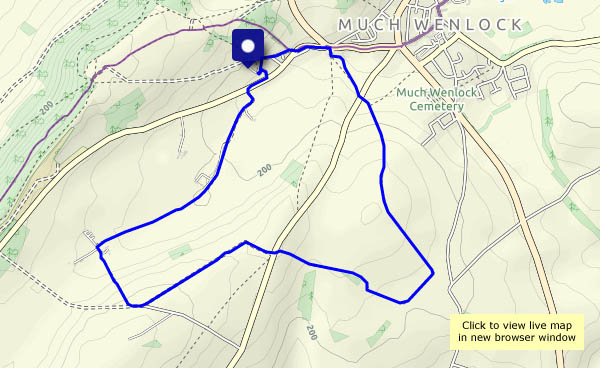
An easy wander to the south-west of Wenlock, on the last day of (meteorological) spring. There are wild flower meadows, fields of wheat, barley, oats and potatoes (and oilseed rape, almost completely faded), and hidden ways between lines of trees. Other than the power station chimney and cooling towers (not for much longer) it’s a rural and unspoiled landscape.

View OD map on Streetmap http://www.streetmap.co.uk/map.srf?X=361430&Y=298891&A=Y&Z=120

The Bannister’s Round

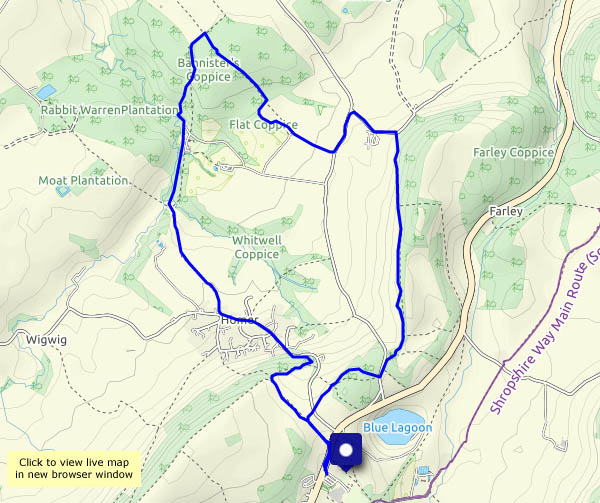
It’s become a favourite – a very enjoyable circular route from Much Wenlock, down through Traps Coppice and into Bannister’s Coppice, then beside Sheinton Brook and back up through Homer. There was a chance of rain earlier in the afternoon – this route is mostly in attractive woodland, but in the event we didn’t need shelter. By the time we’d topped the edge above Homer, the day had changed for the better.

View OS map on Streetmap http://streetmap.co.uk/map.srf?X=362175&Y=301916&A=Y&Z=120

Topley and The Speller

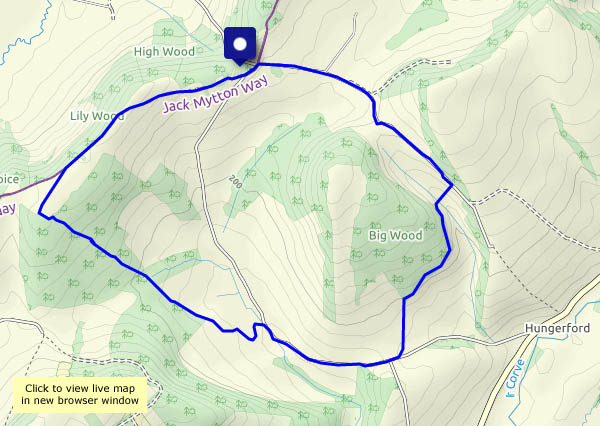
Another afternoon that’s too good to waste… We’re starting at the top of the Rushbury to Beambridge road, where it crests the Wenlock Edge, and walking around the rotund hill at Topley, along quiet farm lanes and tracks. Our return takes us through Upper Millichope and intriguingly-named “The Speller”, just one part of more extensive woodlands hereabout. It’s attractive country too – walking uphill, back towards the edge, we’re in deciduous territory, where the sunshine dapples the undergrowth. Lastly, buttercup meadows lead us to the track along the edge, back to the start.

View OS map on Streetmap http://www.streetmap.co.uk/map.srf?X=352060&Y=289946&A=Y&Z=120

Looks like rain…

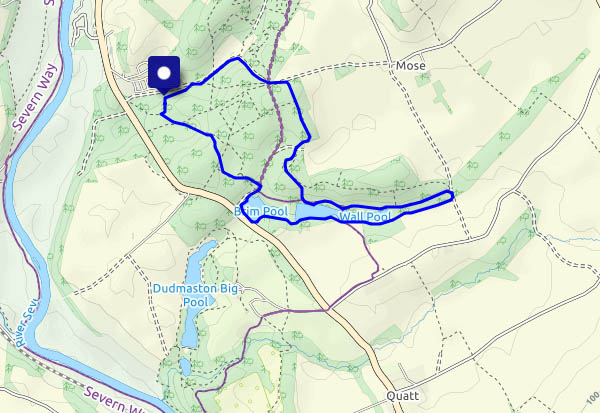
There could be one or two showers this afternoon, the forecast suggested. The clouds were dropping unsubtle hints too. We’d better not stray too far, and preferably somewhere where there might be shelter. We’ll walk down to Coalport – if it rains, we can enjoy our tea and cakes indoors. A few drops began to fall as we approached the old railway bridge at the bottom of the lane – ten minutes later, it had cleared and we were on our way again.  Fed and watered at the YHA cafe, we’re heading back up the dingle, where the wild garlic is still flowering, and to those with a sense of smell, making its presence known…

Hilbre Islands

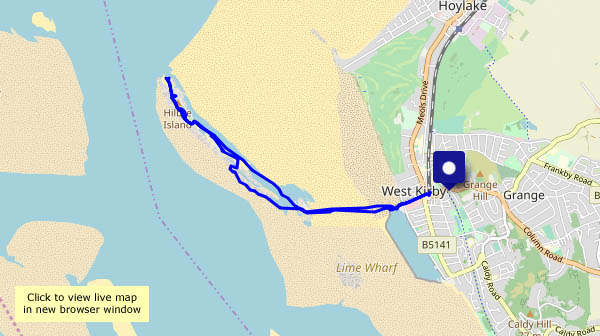
Not as exotic as they sound, these low tidal islands are in the mouth of the Dee estuary. The closest, “Little Eye” (which, I suspect, translates appropriately as “little island”) is barely a kilometre distant from the ice-cream stall at West Kirby. That kilometre is a major obstacle when the tide’s in, but a couple of hours after high tide, the sands (and muds – we brought some home with us…) here are walkable, in waterproof footwear or bare feet. Once there, we’re in a very different world – more than ever, I’m conscious that the photographs may convey the appearance of this little archipelago, but not the feel of being there.

From Little Eye, we make our way to Little Hilbre, where there’s a good spot to sit for a few minutes and enjoy our lunch, before continuing to Hilbre Island itself. The rock formations are wonderful, and there’s a blaze of colour in the abundant thrift (“sea pink”, my companion calls it) and other plant life. At the north end of Hilbre is a deserted lifeboat station, and beyond that, open water. Seals peer up, waiting to reclaim their rocks when the visitors leave. That’s all that’s left for us to do – apart from the aforementioned ice creams, of course. What a great little expedition this has been!

The Friends of Hilbre

View OS map on Streetmap http://www.streetmap.co.uk/map.srf?X=319560&Y=387436&A=Y&Z=120

Another Place

Monday 13 May: Crosby sands, to be precise, on a warm and sunny May day. “Another Place” is the name of Antony Gormley’s installation of 100 cast iron figures in the sands (and mud – beware!) along a couple of miles of foreshore. Some are close to the sea front, others a long way out (it’s almost low tide, and the sea goes out a long way here!). The nearest look as though their heads are above water at high tide; those further out are well-encrusted from top to toe – I don’t think we’d have seen so many a few hours later. One or two are quietly tipping over – I wonder how permanent this “permanent” installation will prove to be?

We spent the best part of an hour just strolling along the sands, digesting the scale of this artwork – a tremendous sight, well worth the journey.

“Another Place” on “Visit Liverpool” website