Titterstone Clee and Croft: a day of two halves

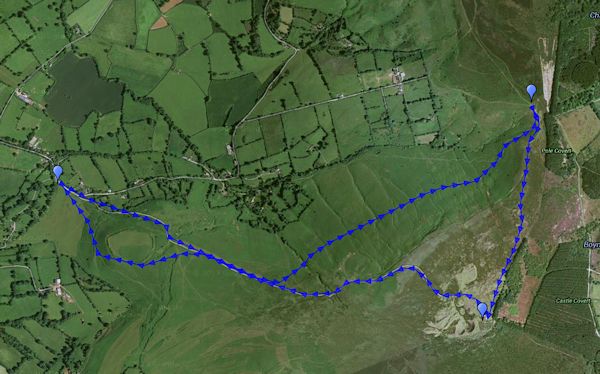
Tuesday: We’ve had a very pleasant overnight stay in Ludlow, and now we’re looking for some not-too-energetic entertainment – it’s a warm morning, though the weather is gradually changing. The view from the top of Titterstone Clee could be good, and it’s a gentle stroll up from the car, parked on the old quarry level (it was, and it was…).

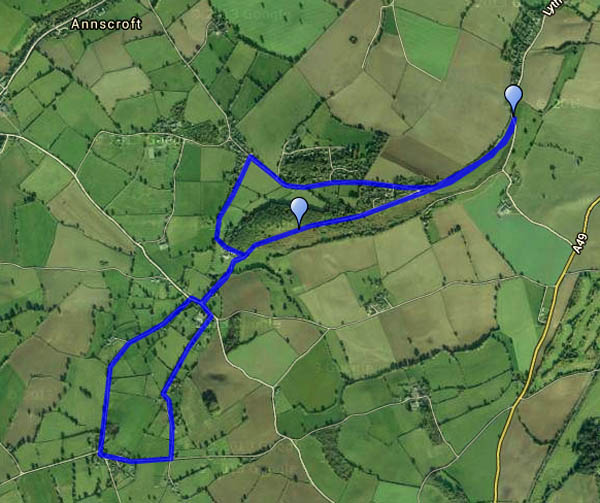
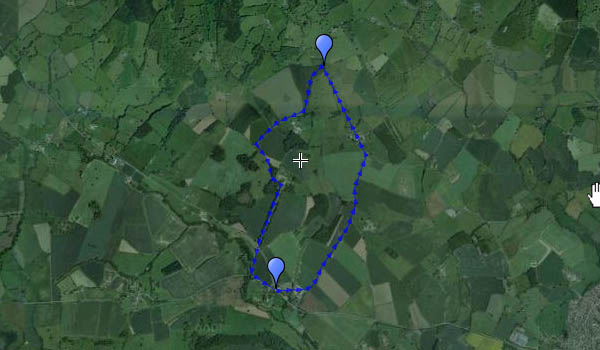
The tea-room at Croft Castle would be good for a lunch break – afterwards, we would walk up to Croft Ambrey, where the hill fort provides fine views of the Welsh border hills. The chestnuts in the park are increasingly decrepit;  replacement saplings grow nearby. We’ll return to the car by the wooded Fishpool Valley. There’s not much water in the pools – I suspect that’s going to change over the next couple of days.

Croft Castle and Parkland NT

Cloudy Clee

After a very warm and sunny morning, the clouds have gathered, though it’s still warm and humid. Rain is forecast for the evening, but in the meantime, it would be good to be somewhere high, perhaps cooler and breezy. Can’t get anywhere higher, within the county, than Brown Clee.

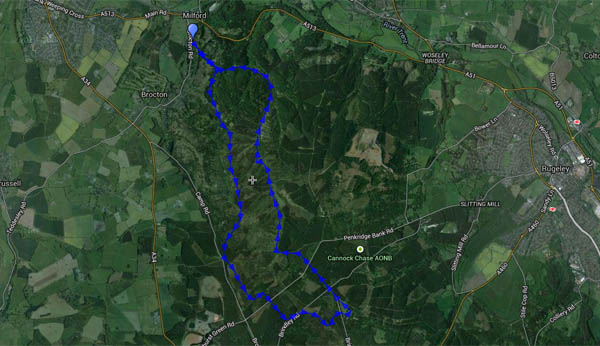
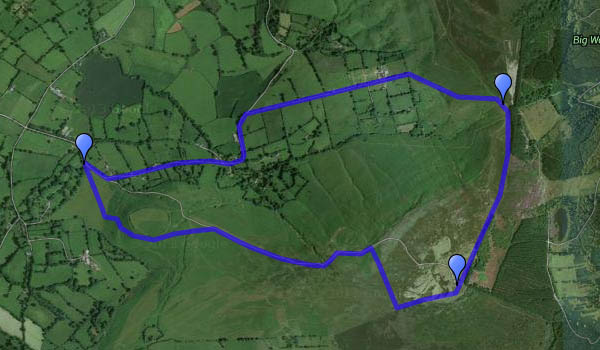
It’s not far to the picnic area near Ditton Priors, a useful place to leave the car and an ideal starting point for easy ascents. The direct route would do for the return, in the meantime, we’ll take a slightly longer path – not the estate road which we’ve used before, but a higher track which leads steadily, on the gentlest of gradients, to the col between the hill’s twin summits. It’s been pleasant enough amongst the trees, and there have been some extensive views to the east; now we’re on the west-facing side and the views are immeasurably better – and there’s a very pleasant cooling breeze.

The direct path takes us back to the car – and we’ve left the passenger-side window wide open. I don’t think anyone has noticed.

Nut Batch and the Lone Pine

Priors Holt, at the entrance to Nut Batch on the Long Mynd, is a good place to start a short walk. It’s also generally reckoned, amongst those who know of such things, to be the model for children’s author Malcolm Saville’s “Witchend”, the home of the “Lone Pine Club”. “Where’s the lone pine?”, asked my wife. I guess the club predated the Forestry Commission’s activities in these parts – there’s no sign of it.

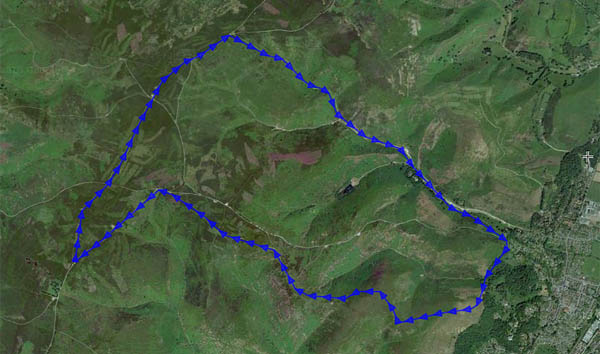
The same body’s forest track provides an easy, gently graded route (beware of bmx bikes…) to the summit ridge of the Mynd , where we’re at last free from the trees. As ever, the views into mid-Wales are extensive, and there’s something of Arcadia (capital: Bishop’s Castle) in the middle distance, where lush pastures are encircled by hills.

We’ll return by a route we’ve not tried before, skirting the forest’s south-west flank, before entering the plantations and following a fairly clear path downhill. It’s probably a very clear path in the winter, but at this time of year it’s very nearly impassable, with head-high bracken, and interlocking brambles grabbing us in a most unfriendly manner. At least we found the (a) lone pine. Note to self: bring machete next time.

Hope Bowdler, briefly…

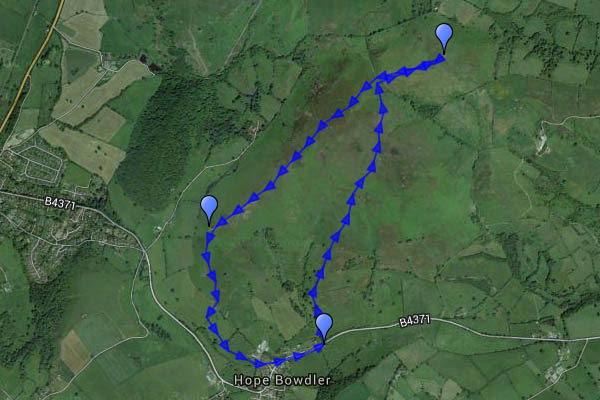
We would have spent longer, and walked a little further, on the Hope Bowdler hills – at least as far at the Battlestones. But as we took in the view from the ridge, a shower was approaching from the south-west, immediately downwind. We didn’t hang around – and sure enough, we needed the wipers briefly as we drove away. In the event, it was only a little drizzle in the wind – we perhaps wouldn’t have been soaked, but it had looked rather ominous…

Sìthean a’ Bhealaich Chumhaing

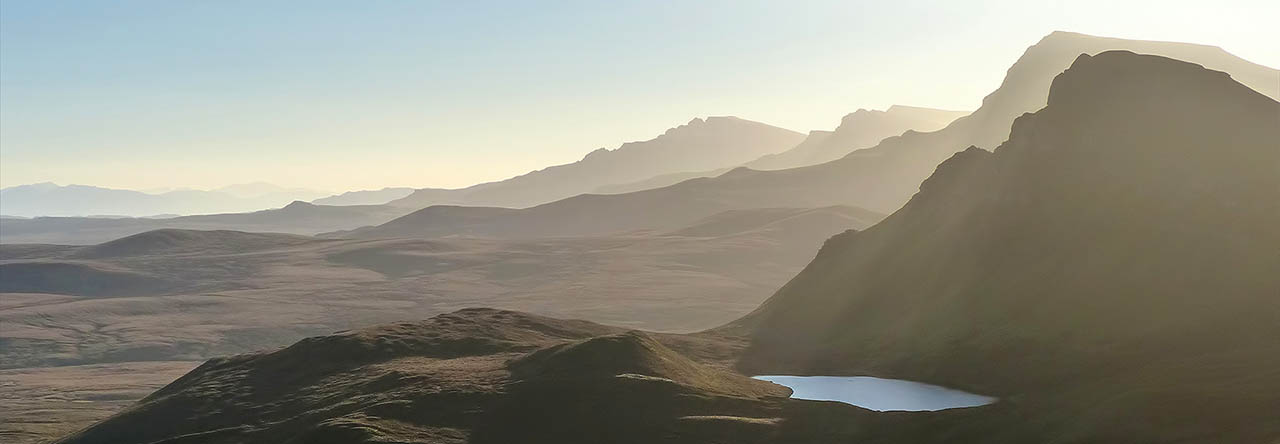
North of Portree there’s a ridge – a line of hills frequently seen in photographs but, I suspect, infrequently visited. The photographs in question are of the Old Man of Storr, with the Storr Lochs and the hills in question behind. The highest point, Sìthean a’ Bhealaich Chumhaing, is just 1286′ above sea level – but that sea is less than half-a-mile from the summit – it’s a splendid airy viewpoint which makes this scenic walk well worthwhile.

I’d be doing this one on my own (just as well…). The household authorities were going shopping in Portree – if I left my car at the north end of the Storr Lochs, I’d have a lift to the start. I’d rather have done the walk in the opposite direction, but that wasn’t going to be quite so easy to organise. Having done the walk, I realise it would be much better walked north to south – route-finding would have been easier (there are a couple of moderately tricky spots going south-north, where it’s important to find the right places to descend from lines of crags). It would have involved less ascent too!

I set out from Portree along the very pleasant path to the Black Rock, continuing by the curiously named “Bile” (a raised beach, apparently) to the start of the ridge proper. There is no obvious path over squelchy moorland which must be crossed before reaching the grassy sheep-cropped ridge, where no path is needed – it’s excellent walking. The main peak comes first, followed by two lesser tops, Creag Ulatota and Fiurnean. The last stretch back to the power station road is a long slog across a pathless sodden moor of tussocky grass, making for slow and hard going, and damp feet. Only once did I see a bootprint. Back at the car, there’s a sign – the Scottish Rights of Way and Access Society proclaims a footpath to Portree, 6.5 miles. Wishful thinking! If there was a path, it would be a truly excellent walk. And it may be 6.5 miles as the crow flies – but I reckon I walked nearer 8…

Quiraing – the other way

The minor road between Uig and Staffin is very popular with visitors to Skye – the views from the top of the pass are some of the best known in the UK, and the road itself as it winds down the eastern side has featured in countless car advertisements. Consequently, a substantial car park has been made for (perhaps that should read “made by”) those visitors. Many will be content to take in and photograph the views, while others will walk the mile or so to the Quiraing, along one of the country’s finest footpaths. It can be very hard, in the season, to find a parking space, and the path will be busy. There is an alternative…

The aforementioned path actually passes the Quiraing (to enter this astonishing rocky stronghold  requires a fairly exposed scramble up a steep loose slope before threading between the tall pinnacles). It continues to a further area of spectacular rock formations – “Fingal’s Pinnacles” – before descending past Lochs Hasco and Langaig to arrive at the main road around the north of the island near Flodigarry. From the main road to the foot of the Quiraing is a little under 2 miles, and involves a steady ascent (about 800′). And it’s not obvious where the path goes. Consequently, this well-made way is quiet.

We wouldn’t be entering the Quiraing itself today (been there/done that several times) – if I could have got my companion up there, I’d never have got her down again. The path itself is a tremendous way of spending an afternoon without that kind of excitement.

The coral beach

It’s one of the most popular short walks on Skye – to a beach of white coral-like material (not true coral but calcified algae, it would appear – does it matter?), eye-catching on any day and brilliant in sunshine. We joined the throng for the mile or so to the coral (it’s the second white beach – there’s a very small imitation part-way which could fool the uninformed), admiring once again the floral variety beside the path and on the rocks. As well as being peak orchid season, there are also great clumps of thrift catching the breeze. It’s very pleasant despite the crowds (there must have been a dozen or more…), and beyond the beach, a path threads the shore to the end of the promontory, a much quieter place from which to gaze on the view to Isay and the outer isles.

A Staffin afternoon

An afternoon which began with mist on the hills, clearing to bright warm sunshine later. There’s a long-established path at Staffin, running from the Columba 1400 car park over the hill to the sea. Descending towards the shore, the age of the path is evident in the well-laid stone blocks forming the surface. It leads to the slipway; our route deviates across slightly marshy ground (pick the way fairly carefully and feet will remain dry) to the saltings and, beyond, some comfortable rocks – a great spot for watching the waves. It’s a scenic route too – super views back to the Trotternish hills as we ascend, with the sea and the mainland ahead once we’ve topped the ridge. As ever at this time of year on Skye, orchids and other wild flowers abound.

Return to Rubha na h-Aiseig

We’ve been here before – it’s a wonderfully quiet walk through some superb coastal scenery to what is not quite the most northerly tip of Skye (the northernmost point, by about 200 yards, is Rubha Hunish, a mile or two to the west). There’s space for a few cars at Port Gobhlaig, and a way across grass to low cliffs above rocky inlets, an arch and a stack, home to numerous seabirds. An old way then descends to the rocky shore, backed by sheep-grazed grassland. It was busy today – we saw (briefly) two other walkers and (even more briefly) an angler. About a mile offshore is the uninhabited Eilean Trodday. In the distance are the hills of Lewis. In the sea, there’s a small yacht (motoring – there’s barely a breeze), a distant tanker, and a fishing boat which struggles against the strong tidal flow. It’s a great place – must return again