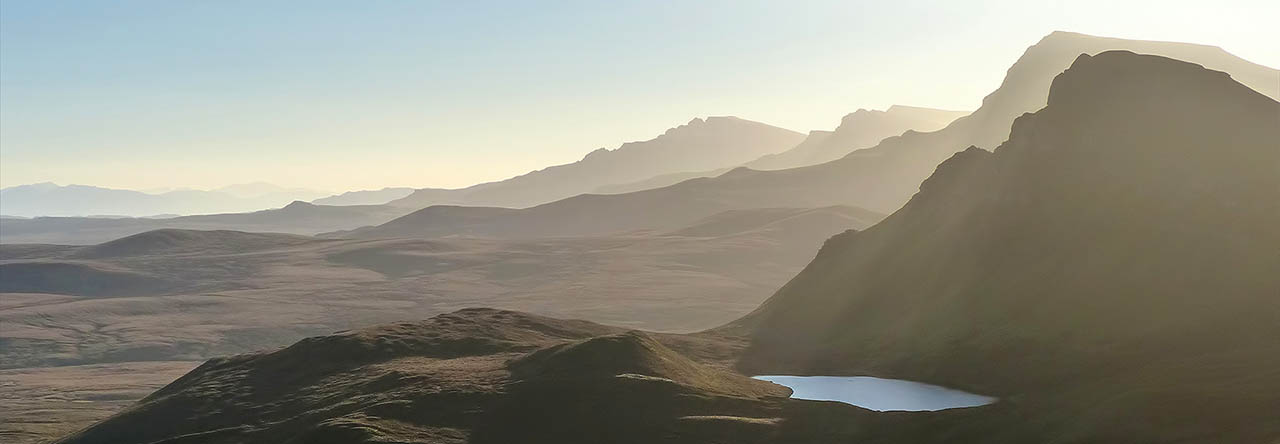
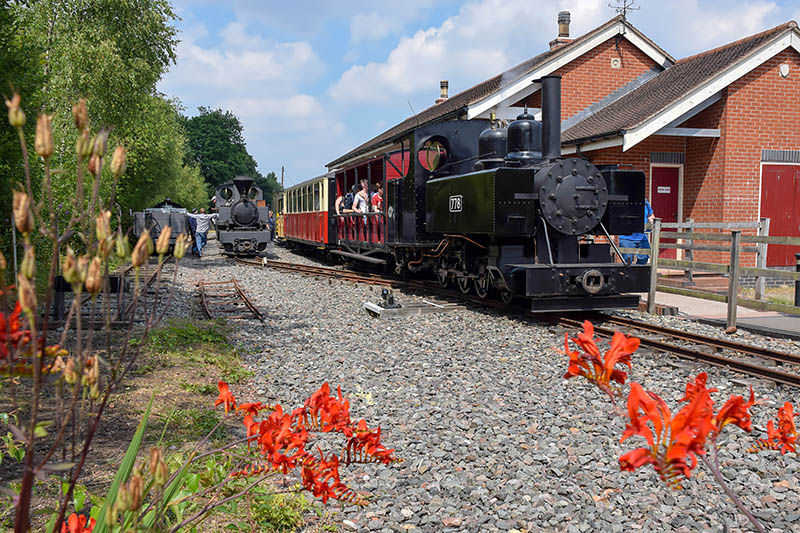
 Just published to Geoff’s Rail Diaries – more photos and an account of Saturday’s visit to the Apedale Valley Railway, for their third (and last?) “Tracks to the Trenches” event. Visit “Apedale: best of three” – now!
Author: geoffspages
Ringing the changes
It’s a regular: walk down to Coalport, for tea and cake. But it’s too warm for tea and cake – we’ll have ice creams instead. We’ll vary our return route too – Corbett’s Dingle (locally known simply as “the dingle”) can be impossibly muddy, but today it’s dry, and pleasantly cool and shady on this warm afternoon.


TTTT – 303
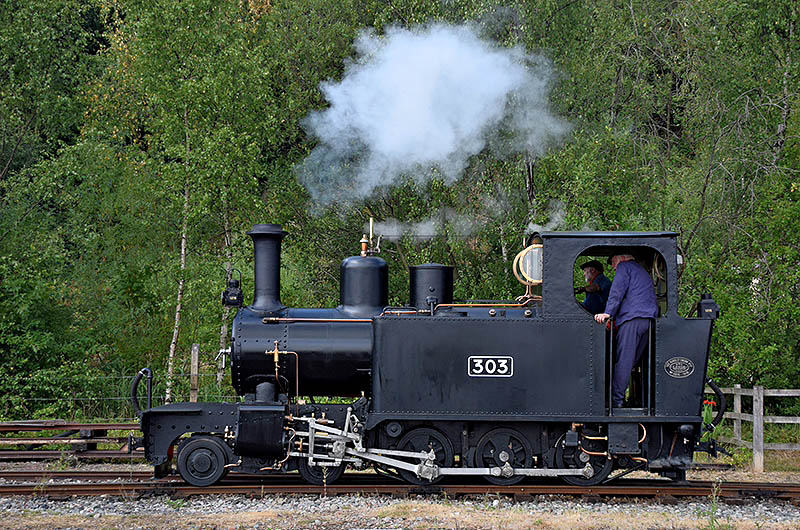 No 303 is a very fine newly-restored WW1 Hunslet 4-6-0, making an appearance at the Moseley Railway Trust’s Apedale Valley Railway, on the occasion of their 2018 “Tracks to the Trenches” event. It wasn’t the only participant in the weekend’s fun and games, but it will have to do for now. A “Geoff’s Rail Diaries” page will appear in due course…
Just a breeze…
It’s too warm for energetic activities, but we need some fresh air and a leg stretch. Woodland might be cool, but the tops could be breezy. How about the Long Mynd? We can park at the northern end of the plateau, near Robin Hood’s Butts, and walk to Pole Bank and back. It’s not a long walk, but it’s sufficient, and yes, there’s a pleasant breeze for much of the way. Hang on to that hat!


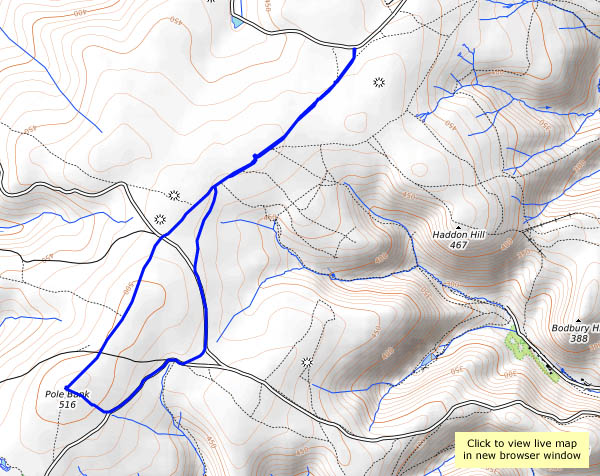
View OS map on Streetmap http://www.streetmap.co.uk/map.srf?X=342575&Y=295371&A=Y&Z=120
Morecambe to Seaton?
My fingers got the better of me! We walked from Moreton, on the north Wirral shore, to Seacombe, to a bus stop just beyond the ferry terminal. We were making for Hamilton Square station, and to continue walking could have meant a missed connection…
Yesterday’s outing by rail had been planned a week or so in advance. In the event, it would be too warm for any longer journeys, and there could be (there were!) pleasant sea breezes away from the train. Before the walk, a ride to the end of the line at West Kirby (it was emphatically Wet Kirby, last time I was there) meant we could take refreshments (a pleasant little cafe in the railway station building), before riding back as far as Moreton. From the shore, there are hazy views to Wales and to Liverpool, and wind turbines out at sea. Around the corner at New Brighton (it’s busy here!), we’re following the west bank of the Mersey, with interesting views of the docks. Below, on the sands, are oystercatchers and four curlews.
We might have made it to Hamilton Square on time, but the bus proved a wise choice. The bridge across the docks was closed for maintenance/road works – if we’d had to follow the alternative route on foot, we’d have been home much later. We’d walked a little under 8 miles anyway – quite enough for this warm afternoon.


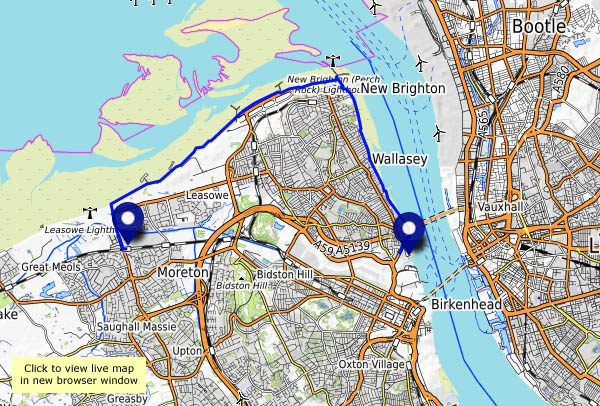
View OS Map on Streetmap http://www.streetmap.co.uk/map.srf?X=329465&Y=394095&A=Y&Z=120
Shady woodlands
It’s pleasantly warm this afternoon, though the sun will be hot out in the open. We’ll follow a route that includes a good proportion of natural deciduous woodland, on and below Wenlock Edge. The views aren’t great in the woods, of course, and the deer are hiding today, but it’s very enjoyable walking in cool, shady and quiet places.


 View OS map on Streetmap http://www.streetmap.co.uk/map.srf?X=362105&Y=302086&A=Y&Z=120
Ten ducks
We’re out to see the ducks again… It’s a walk down to Ironbridge and back, with a break for lunch, and a tour of the ten ducks. They’re a colourful, if temporary, addition to the local scene. There are other things to look at – there’s a Buddha, and there are people doing strange things in the river…


Common spotted
Orchids – in gay profusion! We have a decent crop in our back garden – a dozen flower heads (it’s probably a sign of neglect…), on plants which just arrived, quite unexpectedly, a couple of years ago. If they’re in bloom, the wild ones must be blooming too. The land near Benthall Hall is now looked after by the National Trust, though whether they’ve done anything to encourage them, I don’t know. Whatever the reason, there are hundreds – ones and twos and small colonies in the meadows, and in the little area of scrubby woodland, great clumps of them. They’re mostly common spotted, varying in colour from almost white to a deepish purple, but amongst them are a handful of (late) early purple orchids. Quite a sight!
Benthall Hall NT


Wellington Scot
46100 “Royal Scot”, that is, hauling a crew familiarisation train around the route of the “Welsh Borders Explorer”. No passengers today – and only a handful of others out to record the train’s passing. It was moving along very nicely at Wellington, seven minutes early having left Shrewsbury on time. (Note the young lady on the smartphone, oblivious to the scene unfolding before her – then, a moment later, looking up and realising it was something special…)


