Beside the Skell

The river Skell is perhaps best known (if at all) for flowing through the valley of Fountains Abbey and the Studley Royal water gardens (a world heritage site, on account of the latter). It rises on the moors east of Nidderdale, and joins the Ure on the eastern edge of the city of Ripon (which is half the size of Beverley, the third-smallest city in England). We’ll start at the latter, for lunch down by the cathedral, followed by a visit to the restored canal basin. The canal, which takes its feed water from the Skell, closed in 1956 – forty years later, it had been re-connected to the inland waterways network.

It’s only a short drive to Fountains. The ruins need little introduction – the abbey is one of the largest and best-preserved of its kind, and particularly photogenic, even on a dull grey afternoon. There’s plenty to explore, and afterwards we walk the length of the water gardens, a very pleasant stroll which is concluded by fine views as we approach the abbey once more. Little more needs to be said – visit the NT site (below) for more.

Fountains Abbey (NT)

Beverley, briefly

Wednesday: We’re in Beverley, in the old East Riding, looking for somewhere to eat*. It’s an interesting old place, worth a longer look and closer attention than we were able to give. Holidays as a child, in Bridlington, too many years ago, were distinguished by the dark blue and cream East Yorkshire buses – with white, pointed roofs. How odd! The reason lay in Beverley – they had to get under a low, pointed arch. It’s still there, though the buses no longer have pointed roofs. Beverley has a magnificent minster, grander than many cathedrals – but it’s not a cathedral, so Beverley is a town. Round the back of the minster, there’s a “Lurk Lane”. Its phone boxes are a funny colour and there are fish embedded in the pavement.

* We find the Tudor Rose, whose menu offers Polish specialities. We’d better try it. Potato cakes with slow-cooked beef, and pork cutlets – excellent (won’t need anything else to eat today…)!

Apedale, Wensleydale – Swaledale

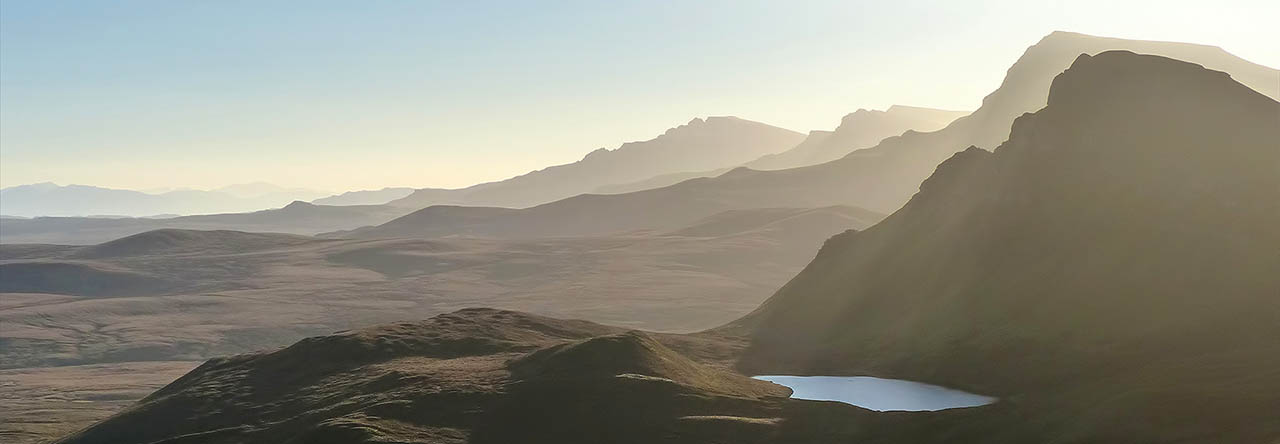
Tuesday pm: There’s a most attractive “Apedale” along the road from Much Wenlock to Church Stretton (are Shropshire’s dales England’s southernmost?), and another Apedale in Staffordshire, home of a splendid 2′ gauge railway. This one’s a very minor, little-known dale in Yorkshire, and the coincidence is just that – quite accidental. The rough track we’re walking would take us over to Swaledale: we’ll stop at the watershed, admire the views, and turn back (walked far enough for one day). We had thought of making a circular route, following the ridge (a flat peaty moor) back round, but there was no path and the going looked hard on deep tussocky grass.

Yorkshire’s Apedale was most enjoyable, and retracing our steps was no hardship. It’s not the most spectacular part of the dales, but it’s very quiet – the only sounds are those of the birds (there are hundreds of rabbits, but they’re silent, and the sheep aren’t saying much). And what birds! A cuckoo, several lapwings, and more curlews than I’ve seen and heard for many years. Their rising, bubbling cry screams “lonely places”, sending a real shiver down the spine (try it: listen to the recordings on the links below). Sadly, they don’t like having their picture taken.

British Birdsongs: Curlew
RSPB: Curlew

View OS map on Streetmap http://www.streetmap.co.uk/map.srf?X=402010&Y=494612&A=Y&Z=120
Middleham

Tuesday am: We’re in Yorkshire for a few days – Wensleydale today, starting with the magnificent ruins of Middleham castle. It’s more colourful than we’d imagined – there are masses of pinky-purple flowers all over the stonework (“erinus alpinus”, also know as alpine balsam and fairy foxglove. I didn’t know that at the time…). This castle has an amazing assortment of dark nooks and crannies, making for a fascinating exploration. Afterwards, lunch at a small cafe across the road, where, sitting outside, we watch local life pass by – including numerous racehorses heading for, or returning from, the gallops nearby.

Middleham Castle English Heritage

Commonly spotted – accidental gardening

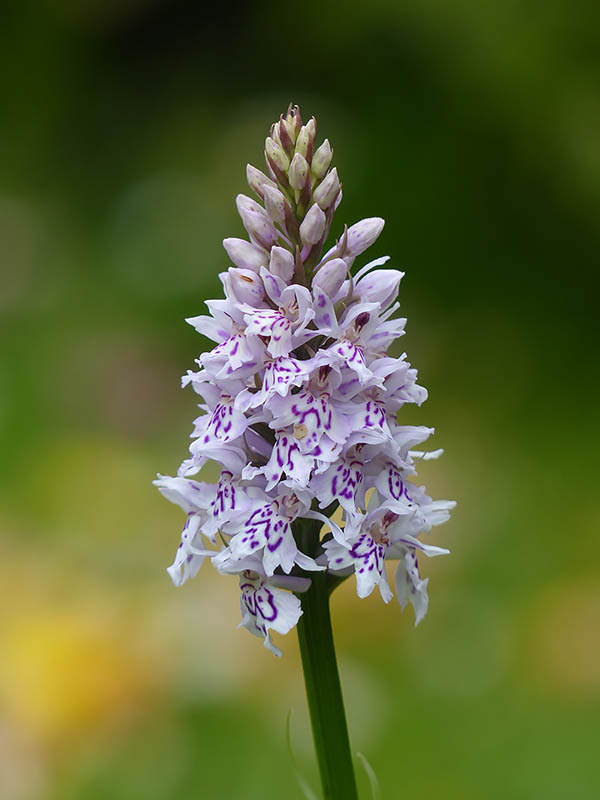
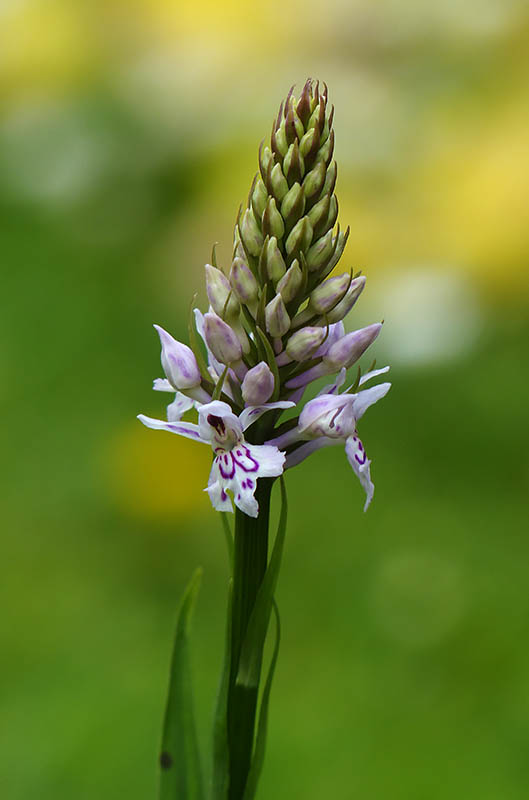
Scenes from a back garden: The most successful residents of our garden are often the accidentals – a fine flock of aquilegias, which arrived uninvited, for example. The “let’s leave it and see what it grows into” principle has served well. The lace-cap hydrangea and the weigela grew from bits accidentally broken off their parents (bought from garden centres). The parents died off years ago, but the broken bits, just pushed into the soil and well-watered, have flourished. Recently, when cutting the grass (it wouldn’t be right to describe it as a lawn) I spotted (wrong word) some distinctive leaves, just in time – and having managed to protect them from the mower, they’ve thrown up shoots with flower heads – common spotted orchids. Now why couldn’t they have come up in one of the borders?

English Heritage

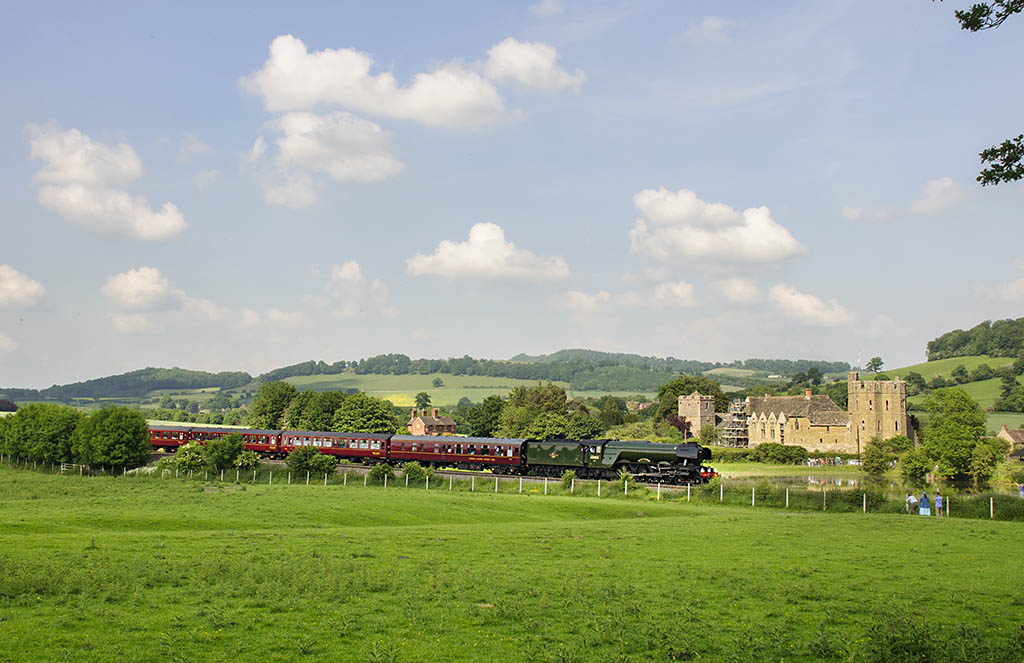
English HeritageDay 4 of the “Cambrian Coast Express” tour. Flying Scotsman is hauling the train (as I write) between Crewe and Paddington, via Hereford and the Severn Tunnel. We went out to Stokesay to see it, with the castle providing a (scaffolded) backdrop. Inevitably, a little cloud obscured the sun over the railway line, while the castle basked in full sunshine. I don’t think 60103 was feeling very well – a few minutes down at Stokesay, it has just arrived at Bristol Parkway (Realtime Trains!) around 30 minutes late. The photo says it all – no visible smoke or steam (it was around 25c – another warm one), thought the diesel at the back seemed to be working hard…

Update: The train left Parkway on time (it had been scheduled for a lengthy stop) and arrived at Paddington on time. I wonder what the problem was?

The Closed Severn Valley Railway

North of Bridgnorth, the track has gone; for much of the way to Coalport, it’s a private road with permissive access, a rough but very walkable surface, and plenty of shade. We’ll need that – not a cloud in the sky. The last train passed through Linley station more than 50 years ago, and given that there are no public roads, this stretch of the valley feels closed off from the outside world. It’s very quiet – just birdsong, contributing to the peace rather than disturbing it (and the odd cyclist, one or two walkers, a gaggle of canoeists and couple of farm vehicles – but who’s counting on a day like this?).

It’s downhill all the way from Broseley to the river; the railway track is more-or-less level. To get to the bus stop in Bridgnorth, we face a long flight of steps, which comes as a shock to the system after about 8 miles of walking. With 45 minutes to kill before the next bus, a pint will be a perfect remedy…

View OS map in Streetmap http://www.streetmap.co.uk/map.srf?X=369185&Y=297306&A=Y&Z=126