A go-slow on High Vinnals

It’s too warm! As we drove away from the Forestry Commission car park (Black Pool, not at all like Blackpool), the car said the air temperature was 26C. It touched 29.5C on the way home – it must have been cooler under those tall pines. That’s why we headed for High Vinnals this afternoon – we could be sure of a reasonable amount of shade on the (necessarily) gradual ascent. There was just enough of a breeze on top too, so that we could stop for a little while and enjoy a most extensive view of the Welsh hills. We returned to the start by the grassy Hanway Common (the sheep seem to like it). There’s a comfortable seat at the top, from which we watched a couple of buzzards – then two red kites swooped over our heads (from behind – hadn’t seen them coming). The bright sunshine picked out their colouring, but as (almost) ever, there wasn’t time to zoom and focus. Leaving the common at its foot, the path passes the eponymous Black Pool. It’s certainly an appropriate name…

View OS map on Streetmap http://www.streetmap.co.uk/map.srf?X=348535&Y=271700&A=Y&Z=120

Bannister’s Coppice and the waggonway

When we walked in Bannister’s Coppice in late October, there were deer everywhere (see “Oh deer“). Will there be any today? More accurately, will we see any today? Yes, if we’re quiet and careful, though they’re shy at present – there’s a mother with a very young-looking fawn, which sneaks through the bracken and across our path, while we stand still and silent. We return by the track up from Seven Springs Farm, which I’ve realised is the route taken by a pre-railway age (1824) waggonway, from Gleedon Hill quarry to the Severn. Once again, there’s no-one else around.

View OS map on Streetmap http://www.streetmap.co.uk/map.srf?X=362890&Y=302881&A=Y&Z=120

Easthope greenery

We’re walking from the National Trust car park at Presthope, through the fields to Easthope and back along the old railway track. There was a “halt” at Easthope, just by the bridge – but we never had a chance to ride on this line. It closed to passengers in the early 1950s; freight from Longville ended in 1964.

View OS map on Streetmap http://www.streetmap.co.uk/map.srf?X=357385&Y=296311&A=Y&Z=120

Grey sky, red kite, Brown Clee

The sky may be uninspiring, but it’s a fresh-feeling afternoon, and the weather forecast thinks it should stay dry. A track follows the contours around the northern part of Brown Clee – we’ll join it at its northernmost point and follow it round to the west, then walk over the top of the hill and down the other side. We can then use the eastern arm of the track to get back to the start. A red kite is overhead briefly; sheep are everywhere, but there’s no-one else to be seen today. Do they know something we don’t, or is it the other way round?

View OS map on Streetmap http://www.streetmap.co.uk/map.srf?X=359685&Y=286976&A=Y&Z=120

Orchids galore

The wild rose is in bloom now, and very attractive it is, with almost-white and decidedly pink specimens. I’m wandering near Benthall Hall on a fine June afternoon. There’s woody nightshade beside the pool, and several orchids (common spotted) in the grass nearby. In the meadow beyond, there are several more amongst the buttercups and daisies. Then, in the scrubby grassland beyond, there are many more – a clump of several large heads catches my eye – and finally there’s a patch of maybe a hundred flower heads. Quite a sight!

The fields here are in the care of the National Trust, part of the Benthall Hall estate.

Morville to Broseley

“If we go to Wenlock on the bus, we can take a Shrewsbury – Bridgnorth bus as far as Morville, and walk back”…  True, though the bus from Shrewsbury was more than 20 minutes late – we nearly gave up (I blame the ongoing road works in Shrewsbury – no fun at all). We’ve walked most of the constituent parts of this route on previous occasions, but never joined them together. It’s very pleasant wandering on this warm 1st June afternoon, and once we’re away from the main road at Morville, it’s very quiet too. Most enjoyable!

View OS map on Streetmap http://www.streetmap.co.uk/map.srf?X=367450&Y=297876&A=Y&Z=120

Last of the Early Purple

Weds. 24 May: the month seems to have passed by rather quickly. We’ve usually been up to the Wenlock Edge by now, to see how the orchids are doing. But we’ve left it late – they’re not doing, they’re done, more-or-less. There are usually lots on the hillside amongst the bluebells, which are history now, though there are still one or two orchid stragglers – late early purple, perhaps. Orchids or not, it’s a perfect May afternoon.

View OS map on Streetmap http://www.streetmap.co.uk/map.srf?X=361490&Y=300371&A=Y&Z=120

Horseshoe Falls

Fri. 12 May: Llangollen: a pleasant walk beside the canal to the recently-restored chain bridge at Berwyn, and the Horseshoe Falls on the Dee. On my first visit here, over 40 years ago, the falls came as a disappointment. After seeing down through the trees to the rushing waters of the Dee, tumbling over the rocky river bed, we came to the curving weir. “Is that it?”. It’s there to provide a feed for the canal, which flows like a clear stream down to Llangollen, and it’s well worth a visit, whatever its origin.

Why did we do it? See previous post “Future Steam

View OS map on Streetmap http://www.streetmap.co.uk/map.srf?X=320446&Y=342859&A=Y&Z=120

Quiet flows the Severn

Weds. 10 May: we’re out for a leg stretch, on a perfect May afternoon. It’s warm too – perhaps we could cast a clout or two. I’ve never been sure whether the saying relates to the month or the May blossom of the hawthorn, which is truly “out”. We’re walking down the lane to Lower Severn Hall – there we’ll cut across to the river, and walk back along the bank as far as the Apley bridge, then return along the old railway track and up through the woods. There are one or two other people about, but it’s certainly quiet beside the Severn here.

View OS map on Streetmap http://www.streetmap.co.uk/map.srf?X=371365&Y=296926&A=Y&Z=120

Rubha na h-Aiseig again

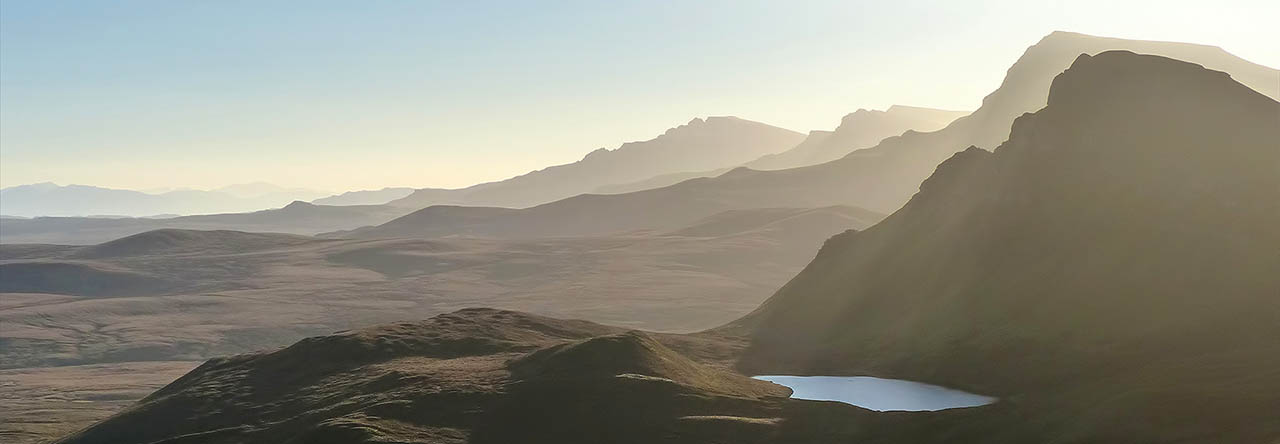
Tues. 2 May: we’ve walked this way several times before, but it’s always an enjoyable outing. From the tiny Port Gobhlaig, a faint path follows the top of low cliffs, with stacks and inlets and an excellent view to the coast and hills to the south. After a little while, what seems to be an ancient path descends steeply to the grassy foreshore, fringed by rocks, pools and camels (just their humps). Eventually, one can go no further. There’s evidence of settlement here, the remains of perhaps three “black” houses by the shore – is this where a ferry (to Trodday, just a mile off shore) once departed? It’s a pleasant, and exceptionally quiet spot – there’s no-one else here – a good place to find a comfortable rock seat and gaze across the water. Eventually, we return the way we’ve come, more-or-less, which is no hardship given the views of the cliffs and Trotternish ridge ahead.


View OS map on Streetmap http://www.streetmap.co.uk/map.srf?X=144015&Y=875895&A=Y&Z=120