Exploring The Braes

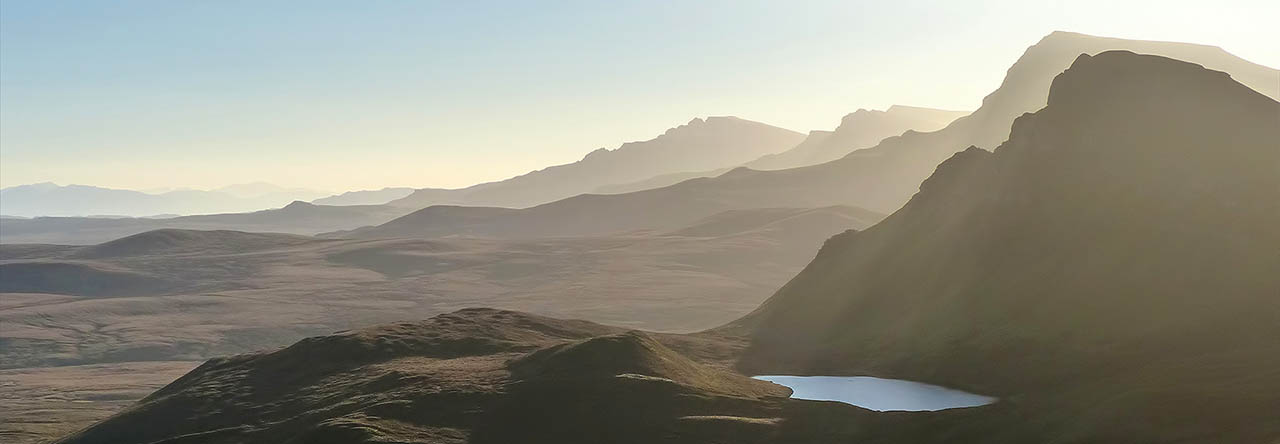
The Braes is a district south of Portree, Skye – the road threads scattered settlement before coming to a dead end at Peinchorran. We’ve visited An Àird, the winged peninsula facing the island of Raasay, many times. The exploration above Ollach was a new one – a very pleasant waymarked route up through the heather to some fine cascading falls, which might have been even more attractive had there been some significant rain recently…

Coille Iosal:


An Àird


See http://www.walkhighlands.co.uk/skye/braes.shtml and
http://www.walkhighlands.co.uk/skye/anaird.shtml for more information

Oans

Perhaps it’s known as “Oans Point”, but the maps label the little rocky headland, below the fractured cliffs of Score Horan, as “Oans”. Whatever its name, the point marks a clear-cut objective for this short walk from Gillen, on Skye’s Waternish peninsula. The flora between Gillen and the forestry road down to the shore level is varied and beautiful at this time of year. The fauna? Gulls, gannets and a substantial flock of oystercatchers. There’s quite a tangle of rocks and pools at the point – a great spot to explore or just sit for a while.

Rubha na h-Aiseig

The northernmost tip of Skye is Rubha Hunish, which makes an excellent and popular walk from the little car park at the end of the Shulista road (see Rubha Hunish). A couple of  miles further east is Rubha na h-Aiseig (“ferry point”?), perhaps only a couple of hundred yards inferior.  The scenery is less spectacular too, but it’s much quieter, and it feels much more isolated. Plenty of sheep (a seal, several oystercatchers and lots of gannets cruising by) but no other people. To the north, there’s nothing between us and the Arctic ice (if there’s any left).

The walk along the low cliffs and, beyond, the rocky shoreline, is worth taking slowly. There are deep inlets, a substantial rock arch and a fine stack (“Stac Lachlainn”) along the first stretch. Our return, across scrubby moors, wasn’t always an easy walk, but the views were different. It might have been worth scrambling through the scrub to the top of Ben Volovaig – at 111 metres, it wouldn’t have been a major expedition. If the weather up here hadn’t been so dry in recent months, a boggy watercourse would have presented an impassable obstacle. As it was, one of us got a rather wet foot…

Packetstone Hill

The Packet Stone is an unspectacular little outcrop towards the south-eastern end of Minton Hill, itself a south-eastern ridge on the Long Mynd. The rock may not be over-exciting – but the views on this exceptionally fresh afternoon were great. No, it wasn’t at all warm – the stiff breeze really made itself felt when the sun went in. We walked along the (very quiet) road from Pole Bank towards the gliding field, and picked up the obvious track (waymarked to Minton) for the airy walk along the ridge.

In addition to its qualities as a viewpoint, the Packet Stone is a good spot to begin to retrace one’s tracks (the alternative would be a long descent and re-ascent). We tried to return along the more northerly path on Minton Hill. It’s clearly marked on the map as a public footpath, but most of its users nowadays have twice as many legs, but much smaller feet than us. Clearly there’s little of interest for the sheep as we approach the road – the path fades somewhat.

Magpie Hill – blue skies at last…

We’ve been here before – a late November walk that ended up as a (very sedate) race against the sunset… Today, the sky was very nearly clear of all cloud – just the odd little bit of fluffy white stuff here and there (photographically, November wins hands down).

It would have been very warm, but for a stiff breeze which made for a very pleasant and leisurely stroll. The views are extensive – the Cotswolds and the Brecon Beacons marking the horizon to south-east and south-west respectively.

The rather unlikely-looking tree apparently marks the meeting point of three parishes.

Alice in the Victorian town

A Saturday afternoon wander around Blists Hill – in the company (an unexpected bonus…) of Alice in Wonderland. We never knowingly encountered Alice herself, though we did bump into the King and Queen of Hearts, the Mad Hatter, the March Hare and one or two other characters (who may or may not have been associated with the Alice theme).

http://www.ironbridge.org.uk/our_attractions/blists_hill_victorian_town/

Rose and rose

Settling in to our gite in May (see https://geoffspages.wordpress.com/2012/05/19/a-week-in-france/), we switched on the TV, hoping we might find a weather forecast. Remarkably, the very first item, on the first programme we tuned, was on David Austin Roses, of Albrighton, Shropshire, England… They’re practically on our doorstep – perhaps we should pay a visit.

Describing themselves as “Breeders of the English rose, specialist growers of old, shrub, species, climbing and modern roses”, there are more roses in the beautifully laid-out display gardens than a rank amateur can possibly comprehend. Rows and rows of them. So there are no captions for the pictures below, which are merely a (fairly poor, it has to be said) attempt to capture the flavour of the place. Speaking of which, the tea rooms were pretty good too…

David Austin Roses website

The Bog and Black Rhadley

Our choice of starting point for a stroll sounds perverse – given that, after recent heavy rain, we were looking for a walk that wouldn’t be too wet underfoot. We chose to follow the road (single track and almost no traffic) to the gate below Black Rhadley, where there’s a gentle ascent to the cairned summit. The views are extensive – but a few yards beyond the top, another cairn marks the viewpoint for a fine view of the Onny valley and Linley Drive, the More estate road.

Returning, we detoured along the heather-clad ridge from The Rock to Nipstone Rock (what a lot of bilberries there are this year), before rejoining the road to return to the Bog Centre (feet still dry!) for the usual great refreshments.