Was it something we said?

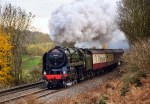
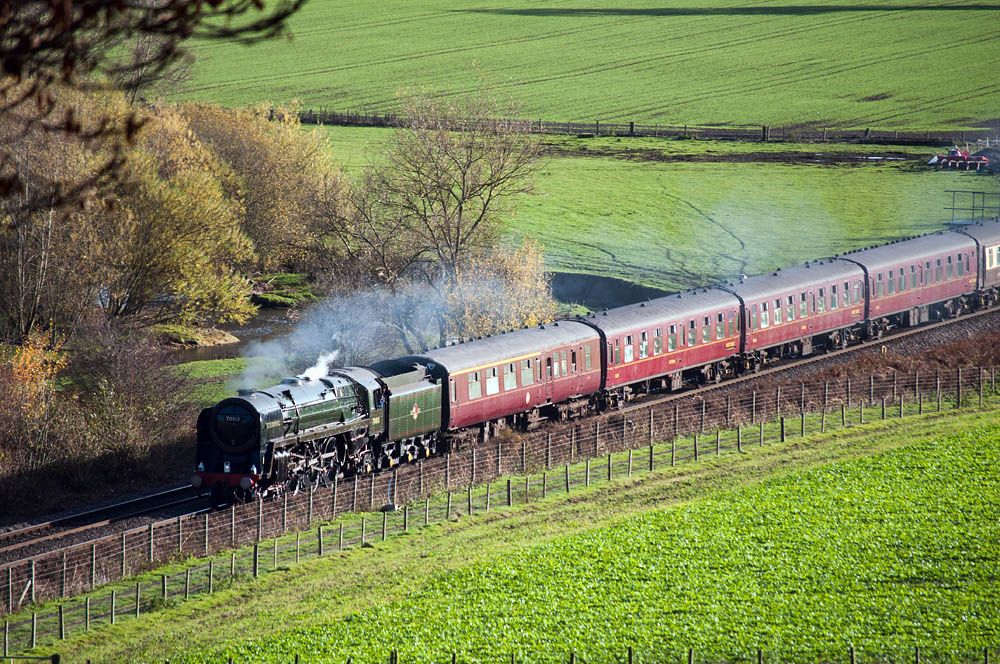
OllieThe conditions were, for the last day of November, near perfect for a photo of 70013 “Oliver Cromwell”, following in the steps of last week’s run of “Britannia”. The air was cold, the sunshine bright and directional, ready to light the steam nicely from behind.  The train was about an hour late (not its fault), but it was going well as it approached in the distance. Then, in prime position for our photos, the driver closed the regulator (on a 1 in 112 uphill stretch – one of the steeper parts of the long climb to Church Stretton). Once behind the trees, the regulator was opened again, and stayed open away into to the distance, including the short downhill stretch to Craven Arms. We could hear it as well as see it. So what went wrong? (I well remember the driver of 46229 closing the regulator briefly on the last 1/4 mile of so of the southbound climb to Ais Gill, 67001 WAG train Stokesayjust to spite the gallery of photographers… Surely not?)
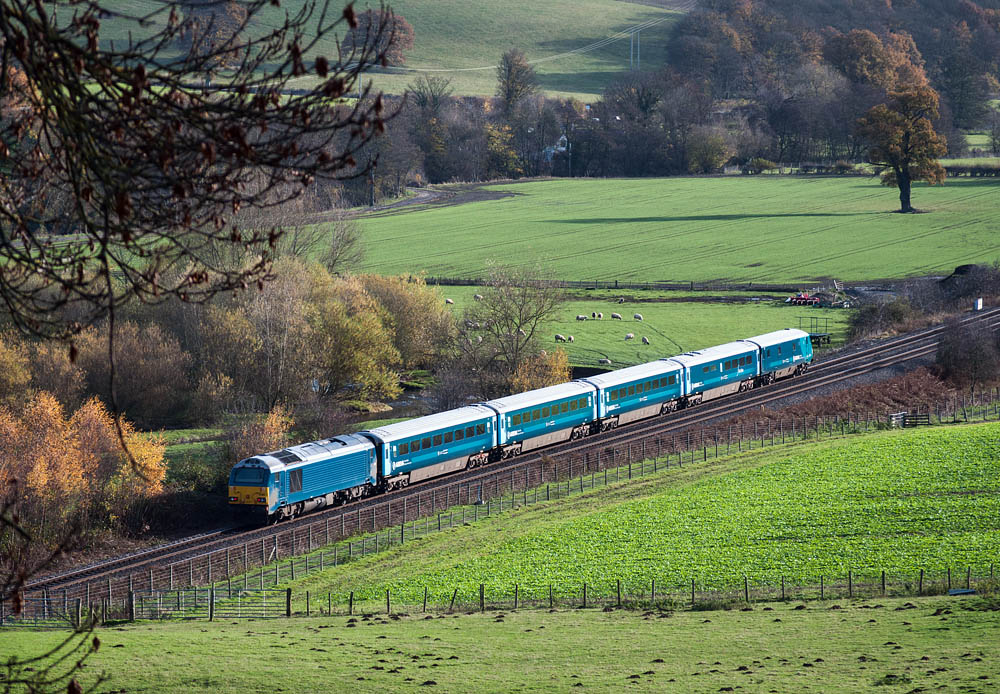
The WAG train was a minor bonus – made a change from the usual endless procession of class 175 units.

70000

Cathedrals ExpressThat’s Britannia – first of the class, and first of 999 BR standard steam locomotives. Today it was hauling the “Cathedrals Express” from Waterloo to Shrewsbury, via the Severn tunnel and the “North and West” route through Hereford. Unfortunately, a preceding freight train broke down, causing substantial delays to services – and to the special. It was around 70 minutes late when it passed Stokesay – the light was going rapidly. So was Britannia…

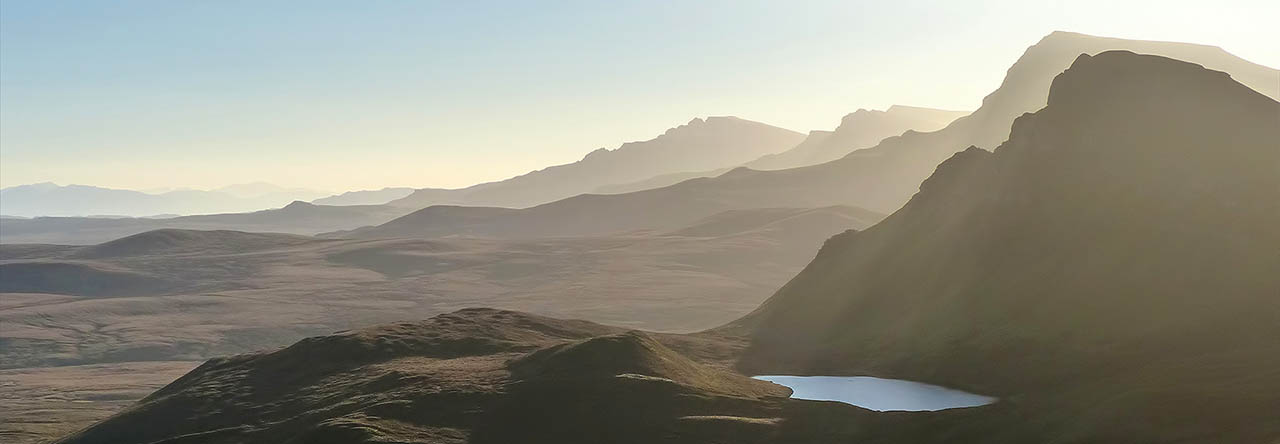
A clear day on Clee Hill

Brown Clee, that is, Shropshire’s highest. It wasn’t just a clear afternoon – there was plenty of blue sky around too – apart from over the hill. Occasionally a shaft of sunlight would break through like a spotlight, but most of the time we had to be content with the views of the sunlit distance. The Brecon Beacons are just visible – 55 miles to the south-west.

This route – just 3 miles in total – starts from the phone box. The box itself is redundant – not only do we all have mobiles now, but it’s been superseded by a modern al fresco alternative. Happily, the old red box lives on as the “Little Red Book Stop”. The sign on the door says

“Please…
…borrow a book
…leave a book in exchange
or…
sit and relax and simply read a book

There’s a handy log beside the box…

Beeston

It’s a castle in Cheshire, not far from Tarporley. Set on a rocky crag above the plain, the views are potentially extensive; the ruins perhaps not so impressive, apart from their dramatic situation. This was a good day for a visit – cold and clear air to make the most of the views. The hills of the southern Peak District form the eastern horizon, with Jodrell Bank clearly visible in the plain. The Wrekin, over thirty miles away, is there on the southern horizon. To the west are the Welsh hills, a reminder of why the castle is here, and to the north-west, the chimneys of the Ellesmere Port refineries frame the towers of Liverpool’s cathedrals, across the blue water of the estuary

Beeston Castle: English Heritage website

Yorkshire contrasts

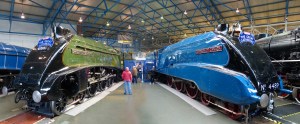
The visitors30 Oct: Firstly, the trip into York – the local bus goes to the railway station, from where it’s a short walk to the NRM. I stayed long enough to record the gathering photographically, then walked back into York (via the Minster and the Shambles) to collect the household authorities at the agreed time. See Six A4s on Geoff’s Rail Diaries for more…

It wasn’t just the railway museum that was busy – so were the streets of York. It’s half-term week up here – perhaps that’s the reason. For the afternoon’s entertainment we chose a much quieter option – a walk to the deserted village of Wharram Percy, in the Wolds to the east of York. Other than some earthworks in the fields, little remains of the village, apart from the ruins of St Martin’s church. The English Heritage sign warned of the dangers of the site – somewhat over the top, I thought, before hitting my head on the “Wolds Way” guide post after taking the picture… In fact the afternoon was a chapter of minor accidents – I’d left the map behind (successfully relying on memory). The light had gone as we walked up beside Deep Dale – so had the camera battery. The spare was in the car…

English Heritage: Wharram Percy

Whitby and Filey

29 Oct: Haven’t spent much time on the Yorkshire coast in recent years – we’ve been to Whitby once or twice in that time, but our last visit to Filey was nearly forty years ago… The weather was great for photography – blue sky and bright sunshine (plus a biting wind). It was also great for day-trippers – we never thought for a moment that Whitby would be so busy. The narrow streets below the abbey were packed; the 199 steps were heaving (no, we didn’t). After the almost-obligatory fish and chip lunch, we headed down the coast to Filey. The lowering sun had gone from the sands and promenade, but the mud cliffs to the north were lit brightly, contrasting red against the cold blue of the shaded sea.

“Elizabeth” was an unexpected bonus, a 1931 Sentinel steam waggon, converted to operate as a bus. Seemed to be doing a roaring trade.

Heading south: Eyemouth and Seahouses

28 Oct: We’re heading down the east coast towards York – a stop or two on the way would be good, and would take us off the main roads for a while. Eyemouth isn’t pretty – it’s a working harbour, a fishing port. The Craster kippers and the hot-smoked salmon were excellent… An unlikely-looking black-tarred vessel on the quayside turned out to be Brunel’s “Bertha” – dating from 1844, she is the oldest operational steam-powered vessel in Britain (possibly the world), apparently.
Seahouses (we’re back in England now) provided a super little lunch break – we nearly chose the wrong pub; the Olde Ship’s crab sandwiches were thick and fresh, just what was required to keep us going for the remainder of the journey.

World of Boats: Bertha